Automated Blockchain Audit Pipeline - BlockHat
Implementation of an audit workflow that centralizes client requests, qualifies the scope, prepares security checklists, and makes report production more reliable.
Key Results
12h/week
Time saved
-70%
Audit prep
100%
Traceability
-48h
Delivery
Workflow Details
Time Saved
12 hours per week
Automated Steps
14 steps
Technologies Used
The Project
BlockHat works on blockchain security engagements: smart contract audits, dApp audits, protocol reviews, and Web3 security support. Before automation, a significant part of the scoping process depended on information scattered across forms, email, internal messaging, audit documents, and manual vulnerability tracking.
The main risk was not only time loss. The team also needed every incoming request to be qualified consistently, technical information to be available before the engagement started, and report production to stay traceable from the first brief to the final client delivery.
Process Before
- Requests arrived through several channels and had to be copied into a tracking workspace.
- Critical scope details were sometimes incomplete: network, repository, commit, contracts involved, expected deadline, and urgency level.
- Auditors manually prepared checklists and report sections.
- Client follow-ups depended on team availability.
Automated Workflow
The workflow was designed around one priority use case: turning an incoming audit request into a ready-to-process case file, with checklist, initial scoring, document workspace, and internal notifications.
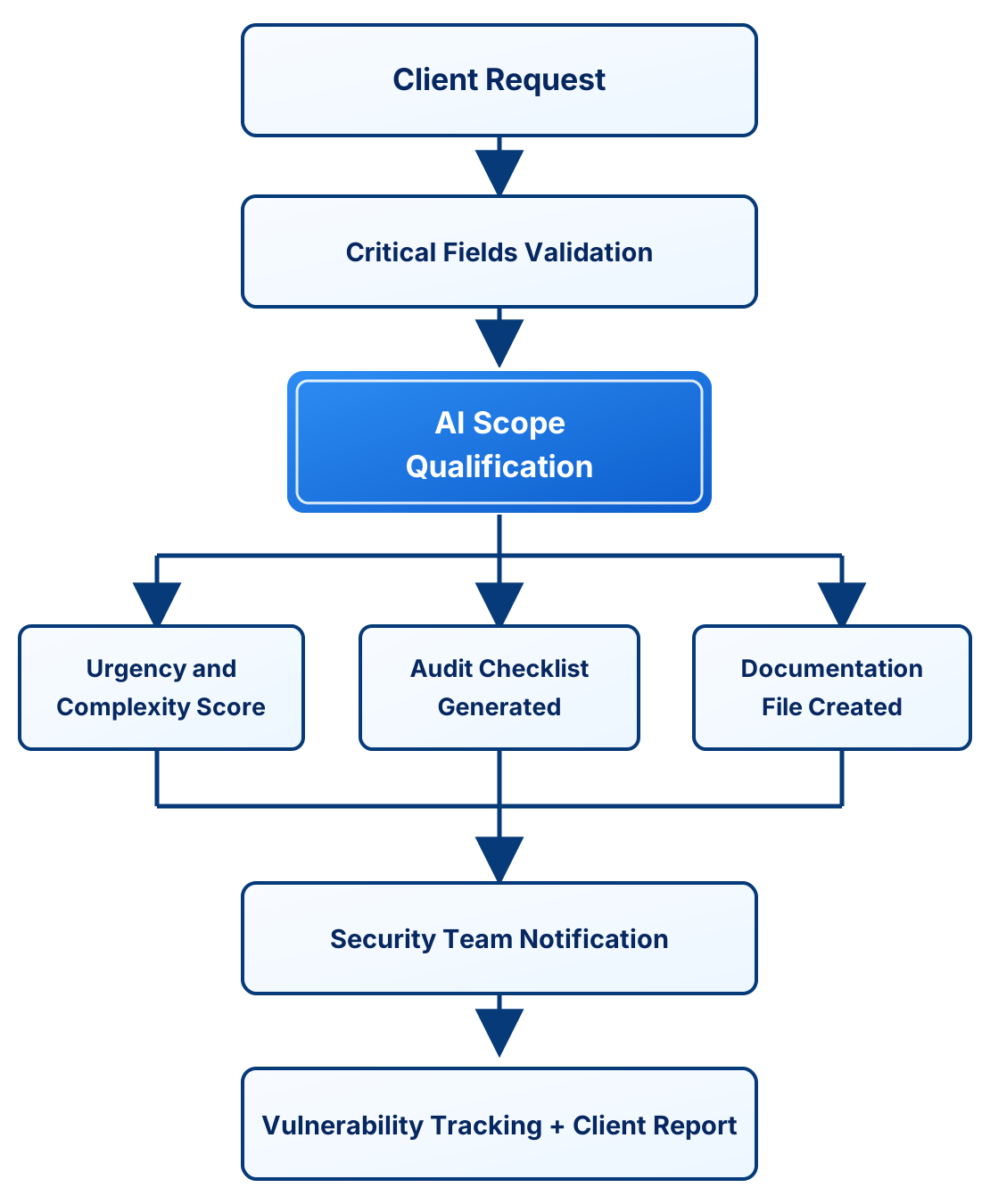
Workflow Components
| Component | Role |
|---|---|
| Intake form | Structured collection of the business need, technical scope, and client constraints. |
| n8n | Workflow orchestration, step control, reminders, and logging. |
| AI qualification | Audit type classification, missing information detection, and generation of an actionable summary. |
| Airtable | Operational tracking of cases, statuses, priorities, and owners. |
| Google Docs | Report template generation and centralization of deliverables. |
| Slack | Internal alerts for new audits, blockers, and required validations. |
Impact Measurement
The baseline was measured on preparation and coordination tasks: copying information, creating folders, sending follow-ups, preparing checklists, and structuring the report.
- 12 hours per week reallocated from scoping, follow-up, and document preparation.
- 70% less preparation time before the audit can actually start.
- 100% of requests tracked with status, owner, timestamp, and history.
- Up to 48 hours saved on delivery of the first structured report.
Governance & Manual Recovery
Sensitive decisions are not left to the workflow alone. AI proposes a qualification and summary, but the security team validates the scope, priorities, and report conclusions. Access rules, secrets, logs, and manual recovery procedures are documented to avoid any opaque dependency.
Result
The pipeline gives BlockHat a more stable, faster, and easier-to-supervise audit flow. Auditors spend less time preparing case files and more time on the security analysis itself, while keeping full traceability for every engagement.
Related projects
Automated Site Follow-up & Quote Requests - BernyConcept
Automation of quote request handling, document collection, and site reporting for a construction project manager specializing in retail fit-outs.
BernyConcept • Jan 2026
10h/week
Time saved
-60%
Site admin
Automated Cleaning & Linen Coordination - CleanLux
Automation of field coordination for cleaning operations, linen tracking, photo reports, and client notifications between stays.
CleanLux • Feb 2026
18h/week
Time saved
-85%
Missed turnovers
A similar project?
Let's discuss your needs and find the ideal solution for your business together.